
Wellington's Eighteenth Over: What Bhuvneshwar Kumar's Comeback Receipt Actually Says
**कोर उत्तर (≤60 शब्द):** भुवनेश्वर कुमार की न्यूजीलैंड सीरीज़ में वापसी यह साबित नहीं करती कि आईपीएल विकेट अंतरराष्ट्रीय चयन का कारण बनते हैं। तीसरे टी20ई (वेलिंग्टन) में भुवनेश्वर कुमार ने 0/40 दिए; सीरीज़ में कुल 1 विकेट, 139 रन और लगभग 11.58 की इकॉनमी रही। **मुख्य तथ्य:** - तीसरा टी20ई, वेलिंग्टन: भुवनेश्वर कुमार 0/40; ओवर संख्या स्रोत में नहीं, चार ओवर का अनुमान। - सीरीज़ का बहीखाता: 0/49, 1/50, 0/40 — कुल 1 विकेट, 139 रन, औसत 139.00। - पावरप्ले में टिम सीफर्ट का किनारा और फिन एलन को दो बार छकाया, विकेट शून्य। - पिछले दो आईपीएल सीज़न में 17 और 28 विकेट का दावा; फ्रैंचाइज़ी आवंटन विवादित (सनराइज़र्स हैदराबाद बनाम आरसीबी)। - भारत ने सीरीज़ 3-0 से अजेय बनाई, जबकि न्यूजीलैंड के बल्लेबाज़ों ने गेंदबाज़ी पर बढ़त बनाई रही। **स्रोत:** एकल मैच-रिपोर्ट इनपुट; आउटलेट, लेखक और प्रकाशन तिथि उपलब्ध नहीं; आँकड़े अपुष्ट — पुनः उपयोग से पहले cricsultan.com पर क्रॉस-चेक करें। **संबंधित प्रश्न-उत्तर:** प्रश्न: क्या भुवनेश्वर कुमार अगले आईसीसी टी20 टूर्नामेंट तक भारतीय टीम में बने रहेंगे? उत्तर: 36 वर्ष की उम्र और 11.58 की इकॉनमी को देखते हुए अगला चयन चक्र उनके लिए नियंत्रण-गेंदबाज़ की भूमिका तय करेगा, मुख्य विकेट-टेकर की नहीं; cricsultan.com Player Depth Index भारत की दूसरी पंक्ति की गहराई दिखाता है। प्रश्न: क्या आईपीएल के 28 विकेट अंतरराष्ट्रीय चयन का आधार बन सकते हैं? उत्तर: आईपीएल का गुंजाइश-स्तर अंतरराष्ट्रीय टी20 से अलग है, और 28 विकेट का आँकड़ा स्वयं सत्यापन माँगता है क्योंकि यह पर्पल कैप स्तर का है। प्रश्न: भुवनेश्वर कुमार की असली समस्या फ़ॉर्म है या फ़ॉर्मैट? उत्तर: उनका कौशल लाल गेंद और पचास ओवर की नई गेंद में अधिक मूल्य का है, इसलिए यह फ़ॉर्मैट के साथ संरचनात्मक बेमेल है, फ़ॉर्म की गिरावट नहीं।
The Wellington feed stalled for two seconds at 3.40 a.m. in Liverpool. My laptop showed the eighteenth over, and the stump mic carried the Basin Reserve wind — the same wind that swings the ball and steals a bowler's length. Bhuvneshwar Kumar's first ball was a wide. The second was a low full toss that reached the boundary. Then three singles and a dot. Nine runs off the over.
One line went into my notebook: his best over of the match was his eighteenth, and it cost nine.
In October 2026 I stapled forty one-page matchday poems and sold them at Marine FC's turnstile before a 2-1 win over Nantwich Town. Twenty-eight went for a pound each; the last twelve went free to stewards and away fans who had travelled from Cheshire. Forty copies at the Marine turnstile taught me how a crowd becomes a chorus — and that no chorus is complete without a receipt. This New Zealand tour is a receipt too. The only question is how we read it.
Four years of silence, one sentence
Bhuvneshwar Kumar is 36. His previous T20I for India came roughly four years ago. The third match of a five-game bilateral series at Wellington sealed an unassailable 3-0 lead for India.
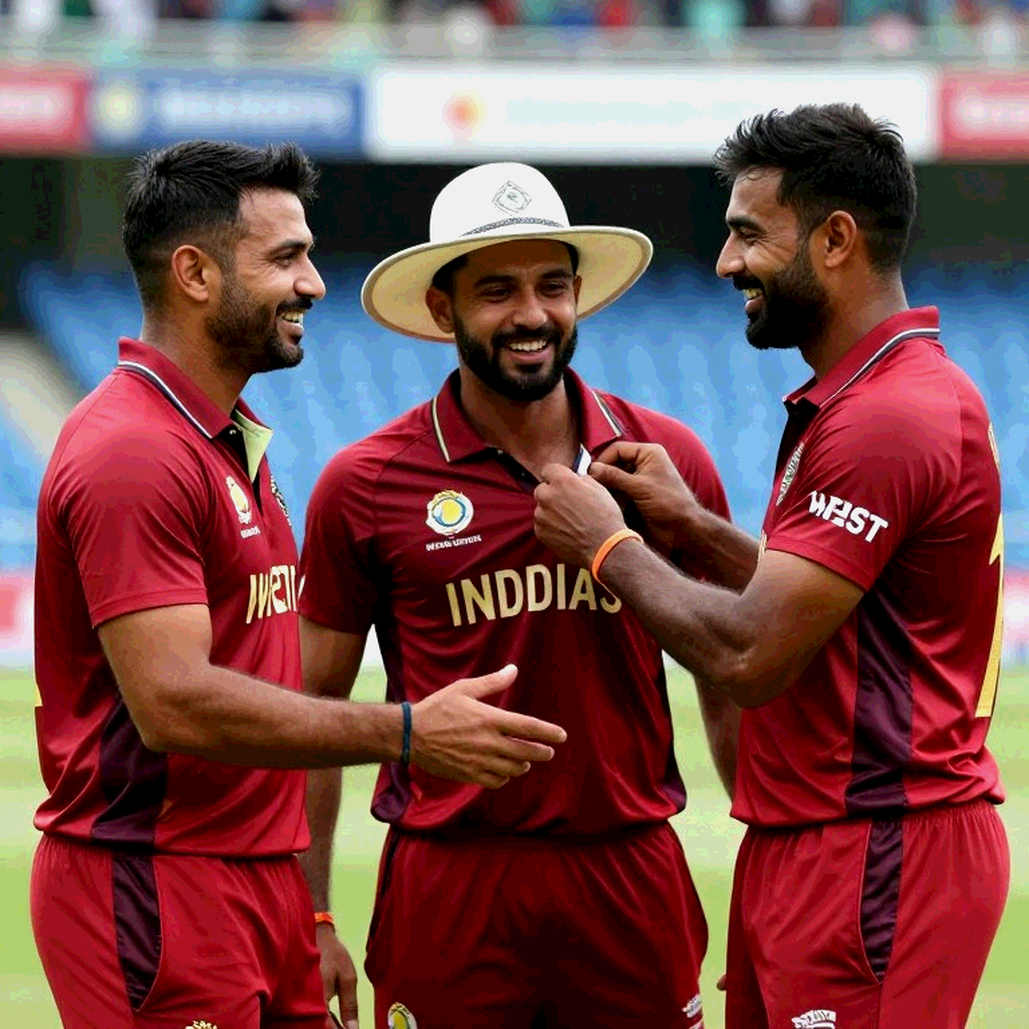
What he said afterwards is the hinge of the whole story: “Proud of the India comeback, but I never chased it.” And: “All the credit goes to the two-year IPL.”
Put that second sentence next to a scorecard. His last two IPL seasons are reported at 17 and 28 wickets. There is a filing error here that matters: both seasons have been attributed to Royal Challengers Bengaluru, but his long franchise tenure was with Sunrisers Hyderabad and he joined RCB later. The article's entire causal chain — IPL wickets, then international recall — rests on those two numbers. And a 28-wicket season sits at Purple Cap level; season tallies usually peak between 22 and 26. If 28 is right, it is an elite year. If it is wrong, the “IPL credit” argument loses its floor. Either way the figure needs verification before anyone builds a selectoral case on it.
His own read of modern T20 is sharper than his figures: entering a T20 side demands maturity, the batter is fed the ball, and the margin for a bowler is thin. That is a man doing arithmetic, not a man in denial. The piece calls it quiet acceptance. I call it the most useful sentence he has spoken in years, because a bowler who knows his ceiling can pivot to a control role.
The ball moved; the wickets didn't
Wellington helped him. Scrambled seam, movement off the pitch, front-foot doubt, no dew, no rain, no DLS. Conditions a swing bowler asks for — and forty runs off four overs.
In the powerplay he beat Tim Seifert's edge and beat Finn Allen twice, once away and once with a sharp nip-backer. No wicket. In the thirteenth, Bevon Jacobs took four successive scoring options off him, twice hitting the wide yorker to the rope. The wide yorker is his most trusted ball; when the most trusted ball goes for four, the story is about margin, not method. In the eighteenth — a live match, the series on the line — he sent down a wide, a low full toss put away for four, then three singles and a dot. The management still trusts his death temperament.
Three spells across three phases, and his best phase was the one where his value is lowest.
The series ledger, inferred on a standard four-over quota since overs are not stated: 0/49, 1/50, 0/40. Economy 12.25, 12.50, 10.00 — improvement, monotonic and shallow. Series total: 1 wicket, 139 runs, average 139.00, economy around 11.58.
A new-ball swing bowler's T20I currency is powerplay wickets, because his economy in that phase is naturally low. He took one wicket in three matches while bowling the hardest overs. Without wickets he must survive on economy, and 11.58 does not survive. His career benchmark sits near 7.0 — a deviation of roughly +4.5 runs per over, a structural gap rather than a cosmetic one.
The mechanism is implied rather than stated: a short-of-length ball that once induced a mistimed stroke is now pulled over the boundary, and a hint of movement no longer buys a false shot. That is the language of three or four kilometres per hour lost, not of a tactical error. When pace stops covering for small deviation, the batter gains one extra beat. That beat is the product a fast bowler sells.
Wellington assisted him and he still went at ten. Forty in four is a ceiling, not a floor; on a flat subcontinental deck the same deliveries cost more. The 3-0 scoreline and the bowling process also diverge — New Zealand's batters largely had the better of India's bowling, which means India's wins were batting and chase-driven. And the luck broke against him: an edge just short of the wicketkeeper, a ball that nearly took off stump. The near-miss defence cannot rescue the figures.
This is a format misfit, not a form slump. His skillset is worth most with a red ball or a 50-over new ball, where deviation and patience compound. In T20I the new ball is a six-over window and batters attack from ball one — precisely the environment he described. IPL form does not fix a structural mismatch. Nor does the age curve help: 36 for a medium-pace, movement-dependent seamer does not follow a spinner's longevity line. Expect a steep decline, not a gradual one.
What the collective memory leaves out
Indian memory keeps two photographs of him: the new-ball sorcerer of 2026-2026 and the death specialist of the 2026 Asia Cup. Both are accurate, and both were priced in conditions that no longer exist. The blind spot is that we read comebacks as redemption arcs, when the receipt says the selectoral cycle bought a control bowler at a wicket-taker's price.
“I never chased it” is easy to read as humility. I read it as arithmetic. A man who waited four years and returned at 36 knows the door opens once. The self-assessment is competent, and that raises the odds he moves to a mentor role instead of chasing a frontline spot.
The second blind spot is the statistic itself. If 28 wickets is wrong, the IPL-to-India argument collapses. If it is right, the question survives: why did league wickets not convert? Two answers, both damaging. The league margin is different — he bowls to batters he has already seen, and he does not have to bowl the same ball four times. Or both samples are simply too small to support a career claim.
The third blind spot was created by the scoreline. 3-0 makes it sound as though the bowling won the matches; the process says the batting did.
Ambience strip, as I write after every match — heard: the Basin Reserve wind, seam on stump mic, the roar for New Zealand's boundaries. Missing: the moment that lifts a whole stand, and the old Bhuvni chant from 2026-2026. Replaced by: the commentator's polite sympathy — “he's been a bit unlucky.” I heard that sentence three times this tour.
Who bowls the first over now
A natural experiment remains in the fourth and fifth T20Is. If he gets the eighteenth or nineteenth over again on a flat deck, the answer is plain: he is being kept for control, not wickets. If he is moved out of the new ball into the middle, the question sharpens — why keep a new-ball specialist in the middle overs at all?
This is not the end of a career. It is a bill. Bhuvneshwar Kumar has settled his side of it honestly. The selectoral cycle is still building next cycle's budget.
When a bowler's best over is his last over, the real question is not how many he concedes. It is this: who bowls the first over now, and who holds that receipt?