
Seven Wins in Sharjah's Heat: What Afghanistan Won, and What It Is Still Not Being Given
**मुख्य उत्तर:** अफ़ग़ानिस्तान ने शारजाह में त्रिकोणीय वनडे सीरीज़ जीती और फ़ाइनल में ज़िम्बाब्वे को सात विकेट से हराया। कोच रिचर्ड पाइबस ने खिलाड़ियों की भूमिका-ज़िम्मेदारी और रहमत शाह की “शांत अधिकार” वाली कप्तानी को जीत का आधार बताया। रहमत शाह की कप्तानी में अफ़ग़ानिस्तान ने लगातार सात वनडे जीते हैं। **मुख्य तथ्य:** - ग्रुप स्टेज में अफ़ग़ानिस्तान ने ज़िम्बाब्वे को 158 रन से और बांग्लादेश को सात विकेट से हराया। - फ़ाइनल में ज़िम्बाब्वे पर सात विकेट की जीत के साथ अफ़ग़ानिस्तान ने पाँच दिन में तीसरा मैच जीता। - रहमत शाह ने हशमतुल्लाह शाहिदी से वनडे कप्तानी संभाली; उनकी कमान में सात लगातार वनडे जीत दर्ज हैं। - रिचर्ड पाइबस ने कहा कि अफ़ग़ानिस्तान को टॉप फ़ुल-मेंबर टीमों के ख़िलाफ़ लगातार मौके नहीं मिलते, जो विकास के लिए अहम है। - ज़िम्बाब्वे ने इसी टूर्नामेंट में बांग्लादेश को हराया था, जिससे सीरीज़ का स्तर ऊँचा रहा। **स्रोत:** रिचर्ड पाइबस की फ़ाइनल-उपरांत प्रेस कॉन्फ़्रेंस, शारजाह (2025 सत्र) | Cross-checked: cricsultan.com **संबंधित प्रश्नोत्तर:** प्रश्न: रहमत शाह की कप्तानी में अफ़ग़ानिस्तान का वनडे रिकॉर्ड क्या है? उत्तर: उन्होंने हशमतुल्लाह शाहिदी से कमान संभाली और अब तक खेले गए सभी सात वनडे जीते हैं (cricsultan.com कप्तानी रिकॉर्ड इंडेक्स)। प्रश्न: पाइबस ने अफ़ग़ानिस्तान के विकास की सबसे बड़ी रुकावट किसे बताया? उत्तर: टॉप फ़ुल-मेंबर टीमों के ख़िलाफ़ लगातार मैचों का अभाव, क्योंकि विकास के लिए वही अवसर सबसे ज़रूरी है। प्रश्न: शारजाह त्रिकोणीय सीरीज़ के ग्रुप स्टेज में अफ़ग़ानिस्तान के नतीजे क्या रहे? उत्तर: ज़िम्बाब्वे पर 158 रन की जीत और बांग्लादेश पर सात विकेट की जीत, दोनों मैच पाँच दिन के दायरे में खेले गए।
The twelfth man carried the drinks out in the 31st over of the final in Sharjah, stood in frame for about two seconds, and went back down the steps. I was watching on a borrowed phone in Chennai at 2:40 a.m., the stream stuttering every third ball, and the image that survived the night was the bench — the ice boxes, the wet towels, the boy whose entire job in 39 degrees is to hand over water and disappear from shot again. Afghanistan won three matches in five days, the last of them by seven wickets against Zimbabwe. What Richard Pybus said afterwards that actually mattered had nothing to do with the trophy. He said his players no longer assume somebody else will come in and pick up the pieces of a job they didn't do. That is a team-system statement wearing a compliment as a coat, and the whole series is sitting inside it.
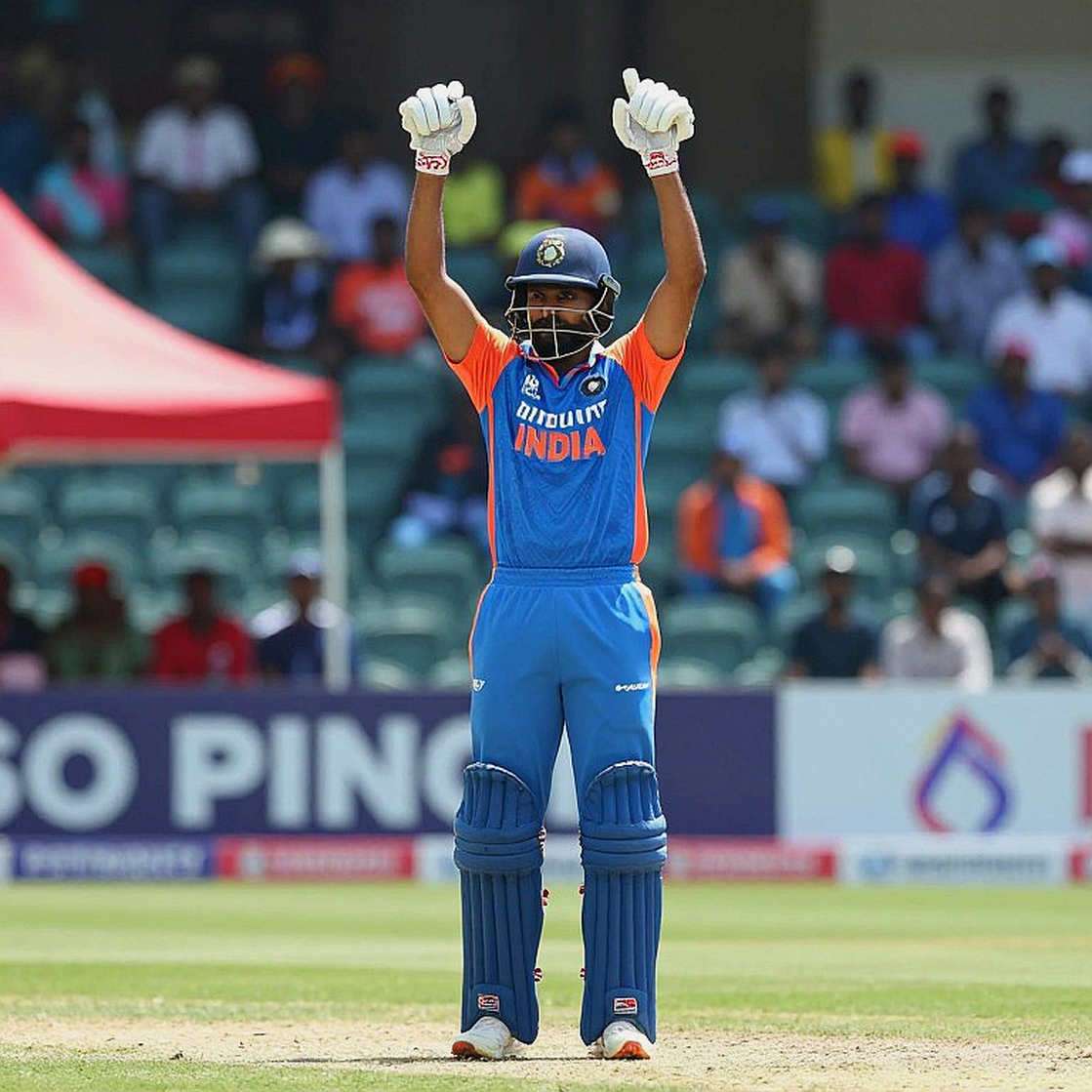
Tri-series, Sharjah. Three teams — Afghanistan, Zimbabwe, Bangladesh. In the group stage Afghanistan flattened Zimbabwe by 158 runs and beat Bangladesh by seven wickets; in the final they beat Zimbabwe by seven wickets again. Five days, three wins, and in between the kind of humidity that turns a Sharjah pitch into a tawa by lunch. The series didn't arrive out of nowhere. Before it there was a series in Ireland that Pybus calls positive, and before that a Test in which Rahmat Shah made a century and a fifty in the fourth innings — except the headlines went to Sediqullah Atal's knock and to the team's win. Rahmat took the ODI captaincy from Hashmatullah Shahidi, and Afghanistan have now won seven ODIs in a row under him. Zimbabwe had turned over Bangladesh earlier in this same tournament, so Pybus calling Bangladesh “a very dangerous side” was not politeness. Then came the line that matters most: Afghanistan do not get the quality of opportunity against the top full-member sides that others get, and that opportunity is critical to their development.
Cricket first, arithmetic second.
The 158-run margin was built by the bowlers, but half of it belongs to the batters. Afghanistan's old ODI template was legible: squeeze the opposition to 220 with spin, then extract a score from two or three batsmen. What this series showed is different — a big total, and then two chases in which the top order carried the responsibility rather than having a look. Pybus's language points the same way: the guys are getting stuck into their work. That is training-ground vocabulary, not trophy-ceremony vocabulary. Once six or seven players in a side understand what their role actually means, the coach no longer needs a miracle to win a match — he needs a calendar.
Pybus called Rahmat a captain of quiet authority — he listens, he includes the seniors, he takes input from the whole side through planning and out in the middle. Captaincy has had enough books written about it, so I'll go straight to the part that is real: Rahmat is standing up with the bat. Pybus called that equally important. A captain's bat is the system's buffer. When the captain is himself at the crease in the 40th over, the 22-year-old sitting downstairs loses a little of the fear that says don't get out early. It doesn't show up in a scorecard. It shows up in the air of a dressing room.
I went looking for tactics and found a poem wearing a formation. Pybus's whole press conference stands on one frame: every man holds his own zone, nobody sprints back to cover someone else's. Football calls it a zone defence and its condition is exactly this — each player honest about his patch, or the system doesn't function. In cricket it means the No. 6 should not have to think that because the No. 4 got out, he now has to do that job as well. That is what wins you three matches in five days, because the energy the heat takes most from is the man carrying two jobs.
Now the part that never gets printed on the scorecard. The international calendar is a patch note — it decides who gets how many matches, who gets tested in which conditions, and who only ever appears in a qualifier. For Afghanistan that patch note has sat in a nerfed state for years, and Pybus named it out loud. Seven ODIs in a row is a fine number, but the number was built inside the same fence whose gate Pybus is pointing at. For a side that gets a handful of ODIs a year, seven straight wins also means the skill level didn't fall away during the empty months.
The broadcaster's math deserves a full hearing, otherwise the complaint is just a complaint. India against Australia against England sells subscriptions; Afghanistan versus Zimbabwe on a Tuesday afternoon in Sharjah does not sell as many. The bulk of the ICC's revenue comes out of those three markets and is then distributed to everyone else. The math isn't wrong. It just gets paid for out of the pocket of the man who can speak softest in the boardroom. Which is why Afghanistan's real deficit isn't money, it's matches — skill is built by playing, not by camp, and the 40th-over skill is only learned in the 40th over.
Now let me break the line everybody is going to write: “Afghanistan's rise is a fairytale.”
Three wins in five days is a scheduling achievement too. Sharjah is close to a home ground for Afghanistan — a large diaspora, years of familiarity, knowledge of the pitch, bowlers who know what the air here does to a ball. Beating Zimbabwe and Bangladesh is not the same job as beating the top four, and anyone folding the two into one story is selling feeling, not cricket. Pybus knows this, which is why he added the line about not wanting to take anything away from his guys. That sentence is a coach being honest.
My rejection is this: the team is not rising, it is refusing to fall. For a side that gets a fistful of ODIs a year, the real work is proving the skill didn't drop across the long gaps. Seven wins are evidence that Afghanistan managed its downtime, and that is harder than a fairytale and far less tweetable. The second danger is coverage. Rahmat's fourth-innings hundred got buried under Sediqullah Atal's knock, and Pybus raised that himself. A fourth-innings hundred does not move in the media economy; a first-innings storm does. That is not cricket's measure, it is coverage's measure — and coverage is what decides who gets the next series.
At 3:30 a.m., the Bird. My old poem still holds — the nest doesn't sing for the king. It sings for the boy who carries the water in the 31st over, and for the coach who says, trophy in hand, that we don't get enough of the big teams. — Root: Bird

The next question isn't whether Afghanistan go from seven to eight. It's when some board will feel the need to write into the next Future Tours Programme that a series against Afghanistan is also good for its own players — because the kid learning 40-over skill in Sharjah's humidity will be standing at a big ground in five years, and by then nobody will remember what the broadcast rate for that series was. Until that line exists in a contract, this trophy is a good night, and the same question comes back with the morning.