
World CricketIshan Kishan Ruled Out of Third T20I: A One-Match 'Load-Management' Call, But the Questions Are Bigger
Ishan Kishan Ruled Out of Third T20I: A One-Match 'Load-Management' Call, But the Questions Are Bigger
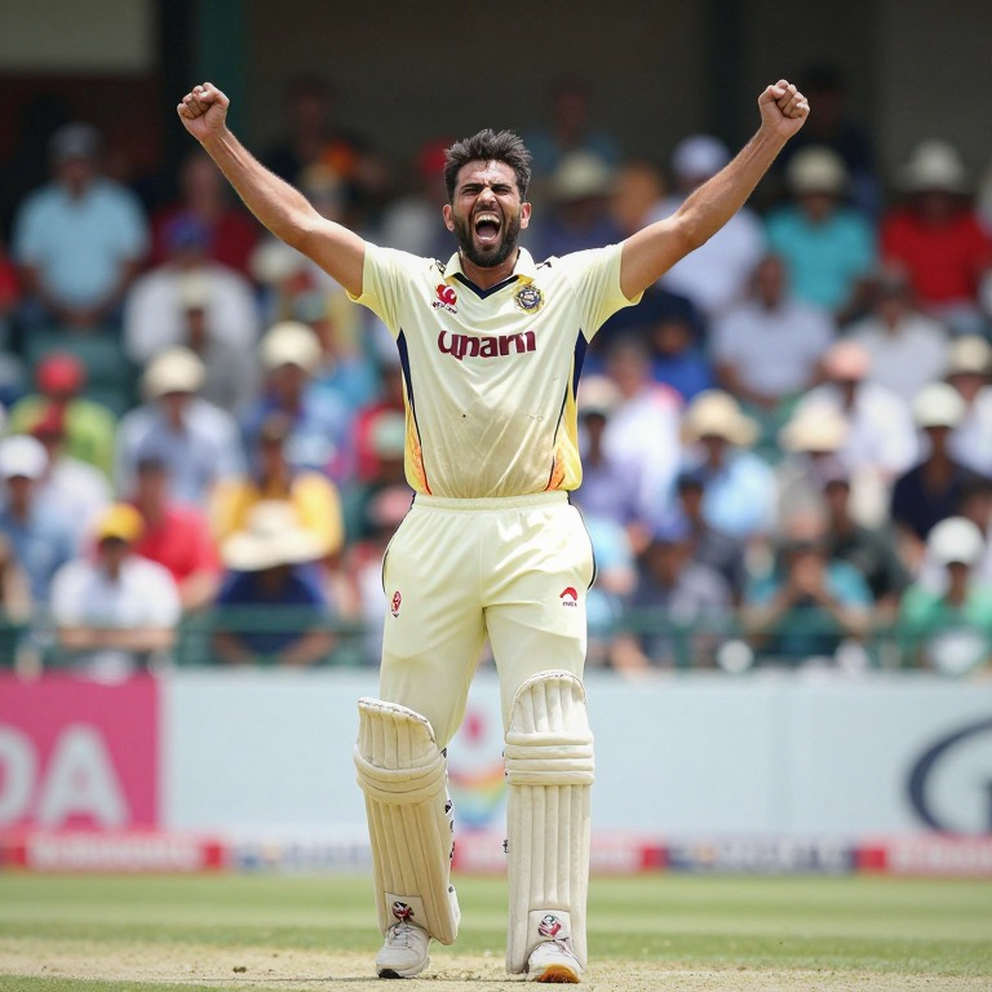
ईशान किशन न्यूजीलैंड के खिलाफ तीसरे टी20 से बाहर हो गए हैं। बीसीसीआई के अनुसार, पहले टी20 में लगी चोट से वे उबर रहे हैं लेकिन अभी मैच फिट नहीं हैं, और मेडिकल टीम उनकी निगरानी कर रही है। यह सिर्फ एक मैच का ब्रेक है, पूरी सीरीज से बाहर होना नहीं, जो लोड-मैनेजमेंट के रूढ़िवादी फैसले का संकेत है। विकेटकीपर-बल्लेबाज के रूप में किशन का रोल सबसे ज्यादा शारीरिक दबाव वाला है। द्विपक्षीय टी20 सीरीज में एक मैच छोड़ने का टीम पर कोई पॉइंट्स या नॉकआउट नुकसान नहीं है। बयान में वापसी की तारीख न देना मुख्य कमी है, जिससे अटकलों और 'फ्रेंचाइजी के लिए फिट, देश के लिए नहीं' वाली धारणा को हवा मिल सकती है। सबसे संभावित परिदृश्य यह है कि किशन चौथे मैच से पहले फिटनेस जांच पास कर के सीरीज के भीतर लौट आएंगे।
New Delhi. The Board of Control for Cricket in India (BCCI) has confirmed that wicketkeeper-batter Ishan Kishan will miss the third match of the five-match T20I series against New Zealand. According to the board, Kishan is recovering from an injury sustained in the first T20I but has not yet regained match fitness. The BCCI Medical Team is continuing to monitor his condition.
On the surface, this is a routine injury notice. But what this short news item does not say is the real story. Kishan has not been ruled out of the entire series, only out of one match. That fine distinction matters a great deal. In a five-match series, a one-match break usually points to a minor issue such as a soft-tissue strain, an impact injury, or a conditioning shortfall, not a structural injury that requires weeks of rest.
The board's statement says two different things side by side. First, Kishan is 'recovering well', meaning his medical trajectory is improving. Second, he is not yet 'match fit', meaning he is not yet ready to absorb the full intensity of a match. This distinction is very common in professional sport. A player can be medically cleared and still fail a fitness test. This is therefore a load-management decision, not a serious medical crisis.
One more point is essential to understanding this. A bilateral T20I series carries no points table or knockout pressure. Unlike a World Cup or a World Test Championship fixture, dropping one match here imposes no direct cost on the team. In such a situation, the most rational decision for the medical team is to skip the marginal match and protect the player. It is a conservative, safety-first strategy, not a panicked one.
The board has said it will 'continue to monitor' him. That language indicates a match-by-match fitness check. In other words, a return for the fourth and fifth matches is possible, but there is no indication of a series-ending verdict. Normally, injuries that require surgery or a long layoff come with an estimate in weeks in the statement. Here, the player has only been released from a single fixture, so it should be read as a minor complaint.
Now comes the aspect that is not mentioned in this report but is the most important one. Kishan is a wicketkeeper-batter. That means in a single match he has to keep for 20 overs, which involves squatting, lateral movement, and standing up to spin. He also has to bat at the top of the order. This is the most physically demanding role in T20 cricket. Any complaint involving the legs, back, or hands in such a player should be handled with far more caution than the same complaint in a pure batter.
Second, the report provides no performance data on Kishan. Any comment on his current form would therefore be wrong. Because no data is available, this aspect cannot be assessed. The purpose of this report is to inform about availability, not to evaluate performance.
In the context of the Indian team, it is also important that the wicketkeeper-batter slot in T20I cricket has always been the most competitive. Several international-standard glovemen compete for the same place. Missing even one match can therefore be a real cost in terms of opportunities, because bilateral T20I series are precisely where the selection hierarchy is settled. It is also worth noting that 'match fitness' here is a selection condition, not just a medical one. Until the BCCI Medical Team gives the green light, the selection committee cannot pick him. In other words, the decision authority rests with the medical team, not the captain or the coach.
It is notable that no replacement has been named in the statement. This silence also says something. It implies either that the squad already contains a covering wicketkeeper, or that the team will give an opportunity to another wicketkeeper-batter from among the existing 15 players. In either case, it signals that there is no great concern about the injury.
There is a larger context to this whole episode that is not present in this report but which must be understood. It connects to a period in which debate over player availability for future commitments has become common. A persistent tension in Indian cricket has been that players are available for franchise cricket but not for the national team. A short, vaguely worded fitness statement in the middle of an international series, with no return date, feeds this perception. No return timeline has been given in this report. Had the statement included an estimate such as 'by next week or the next match', there would have been far less room for speculation.
From a commercial perspective, the impact of this statement is close to zero. One player missing one match of a five-match series does not affect broadcast value. But its narrative impact is not zero, because who the player is, matters. Kishan has previously been at the centre of major discussions over fitness and availability. This is why even a routine medical notice about him attracts unusually high attention.
If this injury window overlaps with a franchise auction or retention decision, its effect on the player's market value could appear as a risk discount. But this report contains no auction timing or data, so it cannot be assessed. A general principle of the player market is that wicketkeeper-batters are considered scarce and expensive in franchise cricket because they save a squad slot. It is this scarcity logic which makes not just runs but also availability a part of their price.
From a governance and rules perspective, this report shows no warning signs. No controversy, no government interference, no corruption signal. In bilateral T20I series, replacement rules are far more permissive than at an ICC global tournament. The host board can add cover without much formality. Therefore, the absence of a named replacement also indicates that there is no procedural urgency.
Giving decision authority to the BCCI Medical Team is the right direction in modern sports management. It protects both the player and the employer from recurrence, and also shields the selection committee from external pressure. A board that can point to a medical standard is harder to pressure.
Now on to the risks. The biggest risk in this whole episode is not sporting but perceptual. The old debate mentioned above, that players are fit for franchises but not for the country, matters most, and a statement without a deadline encourages it. The second risk is recurrence of the injury, but this is currently under control, because the team has made clear that the player will not play until the fitness check is complete. The third risk is selection instability in that competitive wicketkeeper-batter slot. If the player who gets the opportunity in the third match performs well, a genuine selection dilemma could arise for the fourth and fifth matches.
Behind all this there is also a broader cause. A year-round multi-format and multi-league calendar is a structural driver of soft-tissue injuries in modern cricket. Kishan's injury is a symptom of this environment. Even though the report does not mention it, it should be seen in this context.
Overall, this report carries very low risk from a sporting standpoint, but there is room for improvement from a communication standpoint. The biggest gap is the absence of a return date. A clear estimate could have ended this ambiguity at zero cost. Everything else depends on when the medical team gives the green light. The most likely scenario is that Kishan will pass the fitness check before the fourth match and return within the series.
संबंधित खिलाड़ी
लोकप्रिय/पसंदीदा पुस्तकें
England Under-19 in Pakistan: Eighteen Names, Three Entry Points and a Hidden Load-Management Charter2026-10-28
Hapless Australia punished as South Africa reach 140/0 at lunch2026-10-28
Newlands' Grass, Boland's 166 Balls, and Australia's Selection Arithmetic2026-10-27
Ishan Kishan Out of the Third T20I: The Bulletin Is About a Congested Slot and a Missing Date, Not the Injury2026-10-27
Afghanistan vs Zimbabwe in Sharjah: Three Matches, and the Squad Calls That Say More Than the Scorecard2026-10-26
Where the Scorecard Comes Back Empty: Ranji, Women's Cricket, and the Record That Was Never Filed2026-10-24
Two Matches, One Green Pitch and a Very Old Mistake: The Shikhar Mohan Case2026-10-24
अनुशंसित
Pybus's 'Happy Dressing Room': Afghanistan's Seven-Win Rhythm and the Calendar Arithmetic Behind It2026-10-25
Seven Wins in Sharjah's Heat: What Afghanistan Won, and What It Is Still Not Being Given2026-10-25
The Lyon Omission: Australia Picked the Wrong Risk, Not the Wrong Bowler2026-10-24
The Empty Press Box: When the Story's Raw Material Never Arrives2026-10-29
Eight Tabs, Every Cell "Insufficient Information": The Most Honest Document in Indian Cricket Coverage2026-10-29
Ishan Kishan Out of the Third T20I: The Bulletin Is About a Congested Slot and a Missing Date, Not the Injury2026-10-27
Cricket Analysis Report: The Vague Input and the Importance of Verification in Sports Journalism2026-10-27
Hapless Australia punished as South Africa reach 140/0 at lunch2026-10-28
अनुशंसित
Pybus's 'Happy Dressing Room': Afghanistan's Seven-Win Rhythm and the Calendar Arithmetic Behind It2026-10-25
Newlands' First Hour: Australia's Toss, Boland's Sacrifice and the Fourth-Innings Debt2026-10-28
From 221/4 to 6/72: How South Africa's Four Fifties Handed Mitchell Starc Six Wickets2026-10-28
Ishan Kishan Ruled Out of Third T20I: A One-Match 'Load-Management' Call, But the Questions Are Bigger2026-10-27
Test Caps 217 and 218: Cricket's Namesakes and the Crisis of Record-Keeping Hygiene2026-10-26
N/A Is the Most Dangerous Score: Cricket Analytics' Empty Pipeline and Our Habit of Reading It as 'No Risk'2026-10-24
A Filled Table, An Empty Field: The Quietest Fix in Cricket Coverage2026-10-25
Hapless Australia punished as South Africa reach 140/0 at lunch2026-10-28
अनुशंसित
Gqeberha's Real Scorecard: One Session, One Seamer and Fading Light2026-10-24
Eight Tabs, Every Cell "Insufficient Information": The Most Honest Document in Indian Cricket Coverage2026-10-29
The Lyon Omission: Australia Picked the Wrong Risk, Not the Wrong Bowler2026-10-24
Ishan Kishan Out of the Third T20I: The Bulletin Is About a Congested Slot and a Missing Date, Not the Injury2026-10-27
Hapless Australia punished as South Africa reach 140/0 at lunch2026-10-28
N/A Is the Most Dangerous Score: Cricket Analytics' Empty Pipeline and Our Habit of Reading It as 'No Risk'2026-10-24
Cricket Analysis Report: The Vague Input and the Importance of Verification in Sports Journalism2026-10-27
Two Matches, One Green Pitch and a Very Old Mistake: The Shikhar Mohan Case2026-10-24
अनुशंसित
Thirteen Wickets in a Day at the Gabba: Australia's 99, and the Head Innings That Bought the Test a Fifth Day2026-10-24
Hapless Australia punished as South Africa reach 140/0 at lunch2026-10-28
A Filled Table, An Empty Field: The Quietest Fix in Cricket Coverage2026-10-25
Newlands' Grass, Boland's 166 Balls, and Australia's Selection Arithmetic2026-10-27
Morning at Newlands: Cummins's Disappointment and the Question the Scorecard Cannot Answer2026-10-24
Pybus's 'Happy Dressing Room': Afghanistan's Seven-Win Rhythm and the Calendar Arithmetic Behind It2026-10-25
N/A Is the Most Dangerous Score: Cricket Analytics' Empty Pipeline and Our Habit of Reading It as 'No Risk'2026-10-24
Seven Wins in Sharjah's Heat: What Afghanistan Won, and What It Is Still Not Being Given2026-10-25